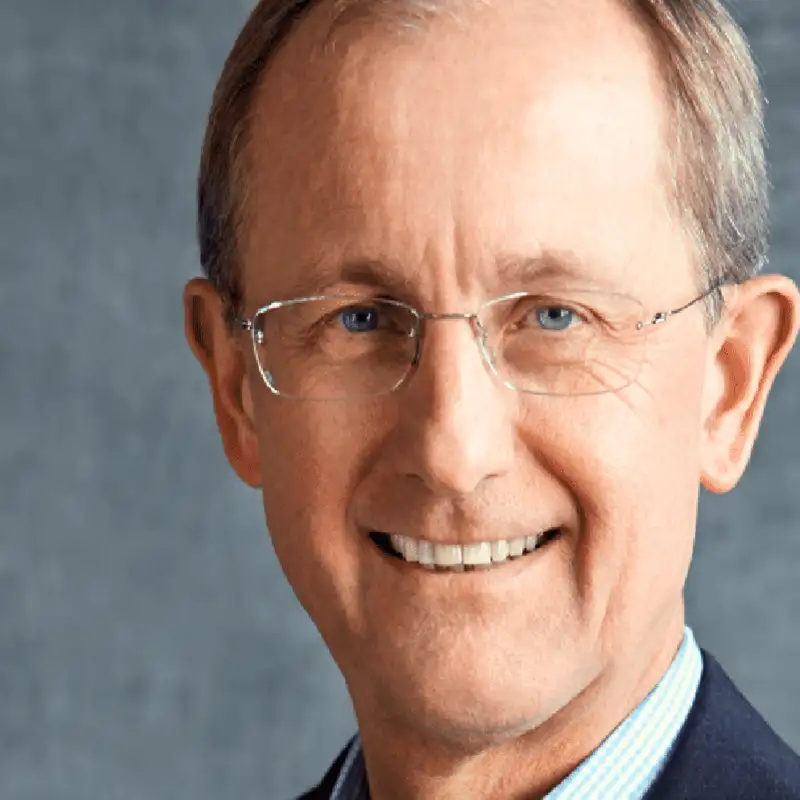
Jules Kortenhorst - Global Coalition at ETC Is Now Committed to Net-Zero Emissions
Download MP3Jules Kortenhorst is the co-chair of the Energy Transition Commission (ETC), a group of 50+ "wickedly smart people" dedicated to effective analysis and insights to drive down CO2 emissions and to accelerating the transition to carbon-free energy. The former chief executive officer of Rocky Mountain Institute who grew RMI from a staff of 50 to 600, Jules is passionate about the ETC's critical work to battle the rise in greenhouse gases that are threatening the planet and humanity.
The ETC has just released a report, "Energy Transition Monitor 2026," that presents good and bad news. The bad news is profoundly disturbing: Rising CO2 emissions are likely to eclipse the Conference of Parties' 2015 Paris Agreement to maintain the average, global temperature to no more than 1.5 degrees Celsius above pre-industrial levels. The good news is that there has been remarkable progress in stemming the emission of gases responsible for global warming.
Ted and Jules discuss the ETC, its genesis and mission, and its new report. Jules calls its findings a paradox: One one hand the rise of renewables and clean energy technologies worldwide is far outpacing all expectations and projections. Renewables are coming on faster and cheaper than anyone had expected. Clean energy supplied 99% of new power growth last year. China has more solar installed than coal, it has more solar and wind capacity than the rest of the world combined. Solar and wind and batteries and EVs are rising worldwide... and their costs are dropping dramatically. China is producing and deploying electric trucks that no one thought could replace internal combustion engine trucks. That's the good news.
The bad news, the sobering part of the paradox, is that emissions are not falling. In fact, they are at best "plateauing," and in many cases rising. Climate outcomes are "off track." A United Nations Environmental Program report, also just released in August, echoes this finding. It states that an "overshoot" is occurring, overshooting the 1.5 degree ceiling... and at best 1.8 degrees by mid century. At best, the report finds, we are on track to hit 2.6 - 2.8 degrees without policy changes. Jules is concerned about this overshoot. It will require us to work hard to bring emissions back to the 1.5 degree threshold before we can get to the critical work dropping emissions.
The conversation shifts to CO2 abatement policies in tough sectors. First and foremost, notes ETC, is phasing out coal. Unlike most countries that dispatch power resources based on marginal cost pricing which favors carbon free and low cost solar and wind, China continues to burn coal due to an antiquated policy that prioritizes coal contracts, even curtailing solar and wind at times. Curtailing methane emissions must also be a focal point, as a single methane molecule is 86 times as potent as a CO2 molecule. Methane must be captured in the oil and gas industry and in coal beds that seep the toxic gas. Cows produce methane at alarming rates and we all have an opportunity to eat less meat to cut methane emissions. Stemming deforestation is key... as is its cure... reforestation. Jules notes that the best way to safely capture emissions is to plant trees.
Ted wraps the episode with a question about what listeners can to. On top of it all, emphasizes Jules, is voting. We simply must get out to vote and elect officials that will take climate change and the need to reverse the rise in emissions seriously. Vote for those that share your views, that have the guts to take on vested interests. And finally, notes Jules, we all must follow what our former boss Amory Lovins, has so aptly framed as "applied hope." This is not to be naive, and simply hopeful, but to apply our smarts — new technologies and policies and programs that are cost and climate effective — to stem rising emissions, to urgently reverse rising emissions, for the benefit of all.
The ETC has just released a report, "Energy Transition Monitor 2026," that presents good and bad news. The bad news is profoundly disturbing: Rising CO2 emissions are likely to eclipse the Conference of Parties' 2015 Paris Agreement to maintain the average, global temperature to no more than 1.5 degrees Celsius above pre-industrial levels. The good news is that there has been remarkable progress in stemming the emission of gases responsible for global warming.
Ted and Jules discuss the ETC, its genesis and mission, and its new report. Jules calls its findings a paradox: One one hand the rise of renewables and clean energy technologies worldwide is far outpacing all expectations and projections. Renewables are coming on faster and cheaper than anyone had expected. Clean energy supplied 99% of new power growth last year. China has more solar installed than coal, it has more solar and wind capacity than the rest of the world combined. Solar and wind and batteries and EVs are rising worldwide... and their costs are dropping dramatically. China is producing and deploying electric trucks that no one thought could replace internal combustion engine trucks. That's the good news.
The bad news, the sobering part of the paradox, is that emissions are not falling. In fact, they are at best "plateauing," and in many cases rising. Climate outcomes are "off track." A United Nations Environmental Program report, also just released in August, echoes this finding. It states that an "overshoot" is occurring, overshooting the 1.5 degree ceiling... and at best 1.8 degrees by mid century. At best, the report finds, we are on track to hit 2.6 - 2.8 degrees without policy changes. Jules is concerned about this overshoot. It will require us to work hard to bring emissions back to the 1.5 degree threshold before we can get to the critical work dropping emissions.
The conversation shifts to CO2 abatement policies in tough sectors. First and foremost, notes ETC, is phasing out coal. Unlike most countries that dispatch power resources based on marginal cost pricing which favors carbon free and low cost solar and wind, China continues to burn coal due to an antiquated policy that prioritizes coal contracts, even curtailing solar and wind at times. Curtailing methane emissions must also be a focal point, as a single methane molecule is 86 times as potent as a CO2 molecule. Methane must be captured in the oil and gas industry and in coal beds that seep the toxic gas. Cows produce methane at alarming rates and we all have an opportunity to eat less meat to cut methane emissions. Stemming deforestation is key... as is its cure... reforestation. Jules notes that the best way to safely capture emissions is to plant trees.
Ted wraps the episode with a question about what listeners can to. On top of it all, emphasizes Jules, is voting. We simply must get out to vote and elect officials that will take climate change and the need to reverse the rise in emissions seriously. Vote for those that share your views, that have the guts to take on vested interests. And finally, notes Jules, we all must follow what our former boss Amory Lovins, has so aptly framed as "applied hope." This is not to be naive, and simply hopeful, but to apply our smarts — new technologies and policies and programs that are cost and climate effective — to stem rising emissions, to urgently reverse rising emissions, for the benefit of all.